

Luxembourg
RAIF · SIF - Law of 23 July 2016
✓No CSSF product approval - supervision sits at the AIFM✓EUR 1,250,000 of net assets within 24 months✓Well-informed investors from EUR 100,000
We build both halves of this section: regulated fund vehicles and the managers above them, and the trusts and private foundations families use to hold assets across generations. The first thing we tell you is which of the two your situation actually calls for - they are not interchangeable, and the wrong one is expensive to unwind.
Updated


A fund is an instrument for taking third-party capital and investing it under a mandate. That is a regulated activity everywhere on this page. The question is only where the supervision sits. In the modern vehicles it sits at the manager: the fund itself launches on registration while an authorised firm above it carries the compliance. Around that come the roles investors are entitled to expect. A depositary, an administrator, an auditor and documentation that discloses exactly what is and is not supervised.
A trust is not a licence and not a product. It is a relationship created by deed: you transfer assets to a trustee, who holds legal title and administers them for beneficiaries under terms you set while you still can. Nobody licenses you to do it. What is regulated is the person you hand the assets to. This is the instrument for protection, succession and continuity, and its entire value depends on the drafting and the trustee being right the first time.
Both halves of this section move assets out of your personal name, and there the resemblance ends. A fund exists so that other people's capital can be invested under a mandate, which is why it comes with a regulator, a manager and service providers. A trust exists so that assets you already own change hands on your terms rather than the law's default, which is why it comes with a deed, a trustee and a beneficiary class. Fixing which one you need is the first piece of work, and it is done before anything is drafted.
Scope is jurisdiction-specific and the boundaries are real: a RAIF is not a retail product, the L-QIF may be offered only to qualified investors, VISTA applies only where the underlying entity is a BVI Business Company and the Act's conditions are met, and a registered New Zealand foreign trust requires a non-resident settlor and a resident trustee.
| What you are doing | What that requires |
|---|---|
| Taking money from outside investors | A licensed or registered vehicle, or a licensed manager above it - a Finantsinspektsioon or FMA authorisation, an authorised AIFM for a Luxembourg RAIF, a FINMA-licensed institution for a Swiss L-QIF |
| Offering the fund more widely | The public tier: Seychelles' public fund at US$1,500, Panama's registered investment company, and a Finantsinspektsioon licence for public, pension and UCITS funds |
| Running a first or single fund below the thresholds | Registration rather than licensing in Estonia and Austria - lighter obligations, and no AIFMD passport on that route |
| Custody, administration and audit | A depositary where the framework requires one, a licensed administrator unless the fund is self-administered, and an auditor - in the Bahamas with audited statements filed within 180 days of fiscal year-end |
| Holding a family business through succession | A statute that permits it - the VISTA trust holds BVI Business Company shares with retention protected and trustee intervention restricted by the Act |
| Holding your own assets for the next generation | A deed and a supervised trustee: JFSC-registered in Jersey, GFSC-licensed in Guernsey, MFSA-authorised under Article 43 in Malta, CySEC-regulated in Cyprus, FMA-licensed in Liechtenstein |
The names differ by jurisdiction and so does the paperwork behind them: a RAIF or a SIF, an L-QIF or an approved CISA fund, a SMART fund under published Rules, a private or registered investment company, a Cyprus International Trust, a Malta trust under Cap. 331, a VISTA trust, a registered New Zealand foreign trust. We map your objective onto the right instrument before anything is filed or signed.
There is no best jurisdiction in this section, only the right instrument in the right place for what you are trying to do. Four variables decide it: whose money is being held, whether the structure needs market access, what the whole cost stack looks like, and who ends up supervised. Below is how the fourteen jurisdictions we work in line up.
This is the question the rest of the page follows from. Capital from outside investors means a regulated vehicle or a regulated manager, with the disclosure, depositary and audit obligations attached. Your own assets, moving to your family, mean a deed and a trustee, and no authorisation for you at all. Structures fail most often when a family arrangement is dressed as a fund, or a fund is run as if it were a family arrangement.
Estonia, Austria and Liechtenstein sit inside the EU and EEA frameworks, so the licence route carries the AIFMD and UCITS passports; Liechtenstein passports by notification between authorities. Switzerland has no EU passport in any form. Union marketing runs under national private placement rules, and neither do the Bahamas, Seychelles or Panama. Distribution reach is decided before the vehicle is chosen, not after.
The state fee is rarely the largest number. A Luxembourg RAIF needs EUR 1,250,000 of net assets within twenty-four months, an authorised AIFM and a depositary above the fee line; Seychelles licenses a private fund for US$750 and renews it for US$1,000. On the trust side, Jersey and Guernsey price institutionally and say so, while Cyprus and Malta run a Mediterranean cost base with EU-supervised trustees.
The RAIF and the L-QIF move supervision from the product to the manager, which is what makes their launch dates the sponsor's rather than a regulator's. Trusts are not supervised at all. The trustee is, which is why the choice of fiduciary matters more than the choice of flag. In both cases the diligence question you will be asked is who is accountable, not what the certificate says.
| Jurisdiction | Structure & supervision | Tax at the structure | Realistic timeline | What it buys you |
|---|---|---|---|---|
| Luxembourg | RAIF · SIF - supervision at the authorised AIFM | 0.01% subscription tax | Months - AIFM and providers, not a queue | Europe's fund infrastructure without a product approval queue |
| Switzerland | L-QIF exempt by law · FINMA-licensed manager | Transparent at fund level in standard cases | Months for an L-QIF; longer for approved forms | A Swiss vehicle on your own launch date - with no EU passport |
| Estonia | Finantsinspektsioon licence, or small-manager registration | 0% retained · 22/78 on distribution at the manager | 2 months from a complete file · 6 outer limit | EU frameworks and passports at a Baltic cost base |
| Bahamas | SCB - Investment Funds Act 2019 · SMART models | None | Fast-track for professional and SMART categories | A vehicle shaped to the mandate, an hour from Miami |
| Jersey | Trusts (Jersey) Law 1984 · JFSC-registered trustee | Confirmed per structure - residence decides | Weeks once source of wealth is documented | The benchmark statute, firewall provisions and decades of case law |
| Cyprus | Cyprus International Trust · CySEC-regulated trustee | 12.5% · participation exemption at the company layer | Weeks rather than months | A common-law trust inside the EU, drafted and litigated in English |
| BVI | VISTA trust - Special Trusts Act 2003 | None in the BVI · economic substance by activity | Set by the instrument and trustee onboarding | Succession over a family business without a fiduciary in the founder's chair |
| New Zealand | Trusts Act 2019 · foreign trust registered with Inland Revenue | Foreign-source income exempt while registered | 10 working days for a complete registration | OECD standing, bought with disclosure rather than secrecy |
Prifinance selects the instrument and the jurisdiction against your investor base or your family, your assets, your market reach and your budget, and says plainly when the structure you arrived with is not the one that solves your problem. From there we run the vehicle, the authorisation or the deed, the service providers and the launch as one file.
The two halves of this section are checked by different people for different reasons, but the list is shorter than it looks. A regulator wants to know who is accountable for other people's money. A licensed trustee wants to know where the assets came from and who is meant to benefit. The requirements below recur across the CSSF-supervised AIFM route, FINMA, Finantsinspektsioon, the FMA in Vienna and Vaduz, the SCB, the FSA Seychelles, the SMV, the JFSC, the GFSC, the MFSA and CySEC.


Whose capital, who benefits, what the structure has to survive, and what happens if the person who built it is not there. The answer decides everything downstream and is fixed in writing before drafting starts.
The domicile and the legal form chosen against the investor base or the family: RAIF or supervised fund, L-QIF or an approved CISA form, licence or registration, trust or foundation, and the holding layer that sits beneath either.
For a fund: the AIFM or licensed manager, the depositary, the administrator and the auditor. For a trust: the trustee selected on fit rather than fee, and a protector where the family wants a check on them.
Constitutive documents, offering or issuing documents and the risk, valuation and liquidity framework - or the deed, the letter of wishes and the beneficiary class. Then the application, registration or notification, complete on submission.
First subscription or first transfer of assets, banking and custody live, and the calendar that follows. Renewals, annual returns, audited statements and the reporting the regime requires.
This market is full of intermediaries selling one product because it is the one they sell. We work both sides of the section. Regulated funds and private structures, which is why we can tell you that the thing you asked for is not the thing you need, and then build the one that is.
Fund lawyers and private-client lawyers in the same firm, so the answer to fund or trust is argued from your facts rather than from what we happen to sell.
Before you pay anyone, you get a written view of what the structure does, where its limits run, and what it will not protect you from.
The quote you approve is the price you pay. State, regulator, trustee, administrator and audit fees are stated separately and upfront.
Offering documents, fund rules and risk frameworks drafted to the regulator's standards; deeds, letters of wishes and beneficiary classes drafted for the family as it will become, not as it is today.
Renewals, annual returns, audited statements, TUBOR and IRD filings, trustee changes and restructuring. Including migrating a structure that has outgrown the one it started in.
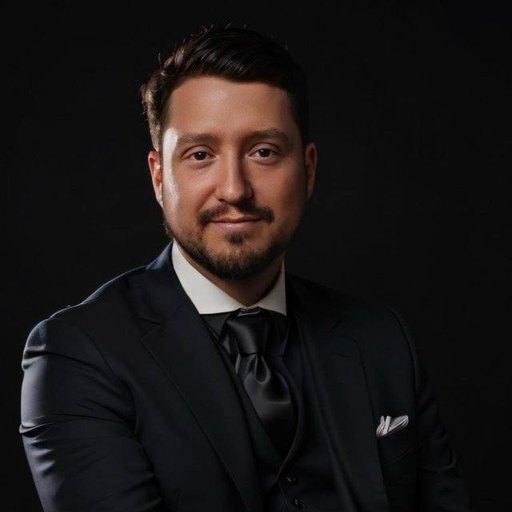
15 years in FinTech and asset structuring. Decides with you whether the answer is a fund or a private structure, then maps it to a domicile and leads the file to the regulator's decision.
Builds the structure itself: the local vehicle, the AML/KYC policy pack, capital and service-provider contracts, fund documentation and tax registrations. His document sets are the reason reviews finish in months, not years.
First point of contact for international founders and families. Runs the whole set-up remotely, across time zones and languages - from the first call to a live fund or an executed deed.
Both instruments raise the same three questions in a different order: what the structure itself pays, what the manager or trustee layer pays, and what the investors, settlor and beneficiaries pay where they live. The third answer is almost always the decisive one, and it is the one the jurisdiction of the fund or the deed does least to change.
The wrapper is built not to add a layer of tax: 0.01% subscription tax a year on a Luxembourg RAIF under Article 46, no corporate income, capital gains or withholding taxes in the Bahamas, source-based taxation with substance rules in Seychelles, territorial taxation in Panama, and transparency at fund level in the standard Swiss, Austrian and Estonian cases. Confirmed per vehicle rather than assumed.
The management layer is a business and is taxed like one: 0% on retained profit in Estonia with 22/78 on distribution, 12.5% flat in Liechtenstein with no dividend withholding, roughly 12% combined in Zug for a Swiss manager, and Austrian corporate tax at the management company. Confirmed at structuring.
Jersey and Guernsey do not tax non-resident beneficiaries on non-local source trust income; the BVI charges no income, gains or withholding tax; a registered New Zealand foreign trust keeps a non-resident settlor's foreign income outside NZ tax. Beneath the trust, the corporate layer carries the real numbers: 12.5% with the participation exemption and no outbound dividend withholding in Cyprus, Malta's imputation system with shareholder refunds.
Settlor, beneficiary and investor residence, and the anti-avoidance rules that come with it. Decide the outcome far more than the structure's own jurisdiction. Reporting is part of the design: AIFMD, DAC and CRS on the fund side; TUBOR, the express-trust register, IRD annual returns and BVI economic substance by activity on the other.
“As a software development crew at FewMoreTaps OÜ, we've had the pleasure of working with Prifinance on some key financial moves.First of all, navigating the world of corporate banking and finance can be a maze, but Prifinance made it feel like a walk in the park. They helped us set up a corporate bank account without the hassle of jumping on a plane or drowning in paperwork. Everything was done remotely, smoothly…”

“I had their assistance in company registration and I would recommend them. They were answering all my clarification during the process and offering all their supportThank you Daniel and Irinia”

“We found PRIFINANCE COMPANYvia the Internet and asked for help in organizing the opening of their company in Estonia. PRIFINANCE COMPANY specialists helped us a lot with this. Their professional, competent approach and knowledge of their business left us with only the best impressions.”

“I'm thrilled with my experience with PriFinance! They helped me obtain a crypto license in Estonia without any hassle. The team was super understanding and always available to answer my questions and assist. It was great to see how they put effort into preparing the documents to ensure everything went smoothly. I'm delighted with the outcome and highly recommend PriFinance to anyone looking to get a license…”

“Opening an account with Prifinance in a Swiss bank was such an easy and quick process that I was shocked. It all started with the first call, where I received detailed guidance on the required documents and the entire procedure.One of the key highlights was their attention to detail. As someone who usually gets tangled up in paperwork, I was pleasantly surprised when they sent me all the documents and…”

“I recently had the pleasure of working with Boris.. and I must say, it was a fantastic experience. Boris went above and beyond to assist me with my residency needs. His professionalism, knowledge, and dedication truly stood out. I highly recommend working with Boris and the team!”

Whose money is it. If you are investing capital raised from other people under a mandate, you need a fund - with a regulated vehicle or a regulated manager, a depositary, an administrator and an auditor. If you are deciding who holds and who benefits from assets you already own, you need a trust or a foundation. Nothing about the two is interchangeable, and the wrong choice is expensive to unwind later.
No. A trust is a legal relationship created by deed, not a licensed product - in Jersey and Cyprus the trust itself is neither registered as a licence nor authorised. What is regulated is the trustee: JFSC-registered trust company business in Jersey, a full fiduciary licence under Guernsey's Fiduciaries Law 2020, MFSA authorisation under Article 43 in Malta, CySEC-regulated fiduciaries in Cyprus, FMA-licensed professional trustees in Liechtenstein.
The vehicles where supervision sits at the manager. A Luxembourg RAIF is not subject to CSSF product approval and a Swiss L-QIF is exempted by law from FINMA authorisation and approval, so in both cases the timetable is set by manager onboarding, service-provider contracting and documentation rather than by an approval queue. Months, in practice, not the year a supervised product can take.
Seychelles publishes it: a private fund costs US$750 to apply and US$1,000 a year, a professional fund US$1,000 and US$1,250, a public fund US$1,500 and US$1,500, with fund administrator licences from US$1,000. It is a licensed vehicle on a regulator's register, and it carries no EU or US passport, which we say before you commit rather than after.
Only to the extent the law allows, and that line matters. Jersey permits reserved powers within what the Law and sound practice support; Cyprus clarified settlor reservations in the 2012 amendment. A trust where the settlor keeps everything is not a trust, and courts and tax authorities treat it accordingly - we draft to the line, not past it.
The BVI VISTA trust under the Virgin Islands Special Trusts Act 2003 was built for exactly this. It holds shares in a BVI Business Company, lets the trustee retain them without regard to whether that is financially advantageous, restricts intervention in the company's management except in circumstances the Act and the instrument define, and lets the trust instrument govern how directors are appointed and removed.
On the licensed routes in Estonia, Austria and Liechtenstein, yes - the AIFMD and UCITS frameworks apply, and an authorised Liechtenstein AIFM passports into the EEA by notification between authorities. Registration below the de minimis thresholds does not carry the passport. Switzerland has none in any form, and neither do the Bahamas, Seychelles or Panama.
Private, not secret. Beneficial ownership of Maltese trusts is recorded in TUBOR, Cyprus maintains a beneficial ownership register of express trusts with the regulator, and a New Zealand foreign trust is known to Inland Revenue in detail, which is precisely why banks and advisers treat it as clean. Structures built for secrecy rather than privacy fail modern review.
The state fee is the smallest part. Budget the manager or AIFM, the depositary where the framework requires one, the administrator and the auditor - plus what the regime prescribes: EUR 1,250,000 of net assets within twenty-four months for a RAIF, EUR 3,000 to apply in Estonia, US$2,750 to US$3,125 a year plus a US$1,250 principal office fee in the Bahamas, US$1,000 to US$1,500 a year in Seychelles.
A foundation is a legal person that owns the assets and is run by a council; a trust is a relationship in which a trustee holds them for beneficiaries. Civil-law families and asset-holding purposes often suit the foundation - Liechtenstein offers the Stiftung and the registered Treuunternehmen alongside its trust, and Panama's private interest foundation is the region's standard holding vehicle. Common-law families and beneficiary-focused planning usually suit the trust.
Get a free legal opinion on your project - our legal team will analyse your case at no cost and provide a written opinion: whether a fund or a private structure fits what you are doing, which jurisdiction and vehicle to use, and what it will cost to build and to run.


